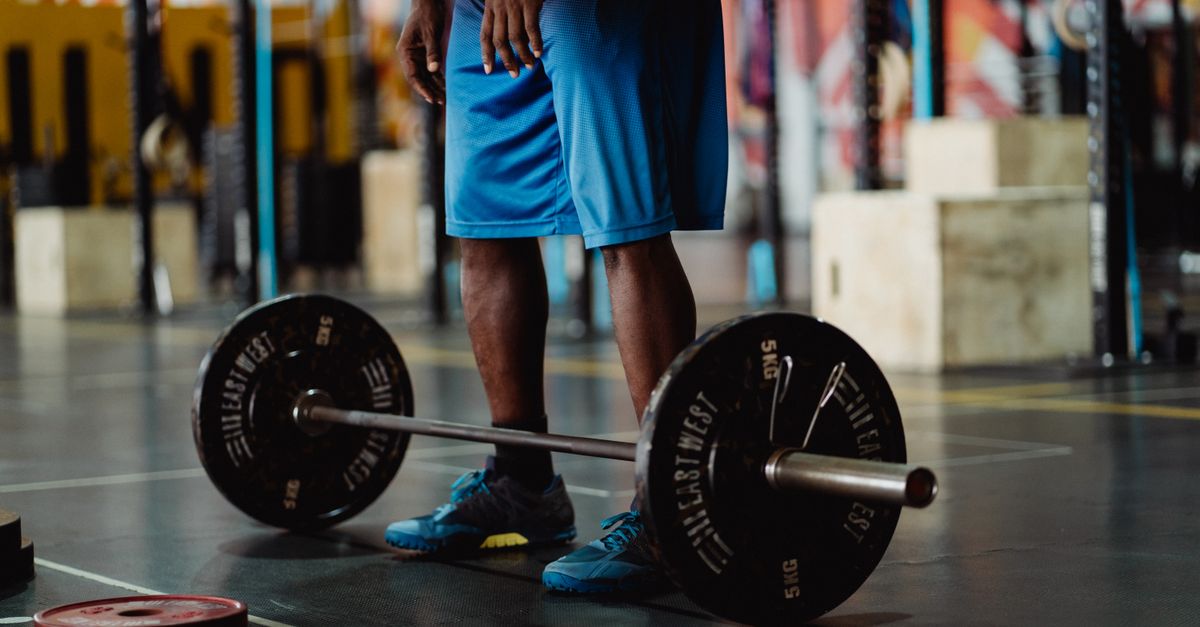
You’re standing over the bar, chalking up, mind focused. The weight feels heavy, but you’re determined. You brace, pull, and… you feel it. Not in your glutes, not in your hamstrings, but a dull ache, or sometimes a sharp twinge, right in your lower back. It’s a familiar story for far too many lifters, myself included at one point. The deadlift, an undeniable king among exercises for building full-body strength and power, often gets a bad rap for causing back pain. But here’s the truth: the deadlift isn’t inherently bad for your back. Bad deadlift form is. And the most insidious part? It’s often not the obvious, egregious errors you see on viral fail videos. It’s the subtle, almost imperceptible mistakes that, over hundreds of reps and increasing loads, slowly but surely wear down your spinal integrity, leading to chronic discomfort and even injury.
I’ve coached countless individuals, from beginners to advanced lifters, and the pattern is always the same. They’ll tell me, “My back always hurts after deadlifts,” or “I can’t seem to engage my glutes properly.” What changed everything for them – and for me – wasn’t just a simple cue like ‘keep a straight back.’ It was understanding the why behind the common failures and implementing precise, actionable adjustments that shifted the load from the vulnerable lumbar spine to the powerful posterior chain. If you’ve been sidelined by back pain, or you’re simply not feeling the deadlift where you should, this article is for you. We’re going beyond the basics to uncover the hidden form flaws that are sabotaging your deadlift and giving your back an unwelcome beating.
Key Takeaways
- Many deadlift-related back pains stem from subtle, rather than obvious, form errors that accumulate over time.
- The most common critical error is losing spinal neutrality, often due to an incorrect starting position or improper bracing technique.
- Prioritize a full body tension setup and the ‘wedge’ technique to effectively engage the lats and transfer tension to the posterior chain.
- Master the hip hinge movement pattern before adding heavy loads to ensure glute and hamstring dominance over the lower back.
The Myth of the “Straight Back”: Why Spinal Neutrality is Everything
When most people are told to deadlift, they hear “keep your back straight.” While well-intentioned, this advice is often misinterpreted as keeping your back vertical or rigidly flat. The reality is that your spine has natural curves – a slight lordotic curve in your lower back, a kyphotic curve in your upper back, and another lordotic curve in your neck. The goal in a deadlift isn’t to flatten these curves out but to maintain them naturally throughout the entire lift. This is what we call spinal neutrality. The mistake I see most often is lifters either over-arching their lower back (hyperextension) or rounding it (flexion) at the start or during the pull. Both put immense shear and compressive forces on the discs and ligaments of your lumbar spine, which are highly susceptible to injury under heavy load.
In my experience, the loss of neutrality almost always begins at the setup. Many lifters will round their upper back to reach the bar, or conversely, overextend their lower back in an attempt to look ‘strong’ and ‘upright.’ Neither is correct. The fix here is to first establish your neutral spine before you even grip the bar. Stand tall, take a deep breath into your diaphragm, and then gently hinge at your hips, allowing your knees to bend naturally as you reach for the bar. Feel the stretch in your hamstrings. When you grip the bar, your shins should be relatively vertical, and your hips should be loaded, feeling tension in your hamstrings, not your lower back. Your gaze should be slightly down and forward, not straight ahead or straight up, to maintain cervical spine neutrality. Focus on creating a “proud chest” and retracting your shoulder blades slightly to engage your upper back, which helps maintain thoracic neutrality.
The “Lazy Lat” Syndrome: Why Your Upper Back Matters More Than You Think
Another critical, yet frequently overlooked, deadlift form mistake is failing to properly engage the lats. Your lats (latissimus dorsi) are the largest muscles in your back, running from your armpits down to your lower spine. When properly engaged in a deadlift, they act like a natural corset, stabilizing your torso and pulling the bar closer to your body. Think of it as “packing your shoulders.” Without this engagement, the bar drifts away from your body as you pull. This seemingly small distance creates a massive increase in the lever arm, forcing your lower back to work overtime to stabilize the load. It’s the difference between carrying a heavy backpack strapped tightly to your back versus holding it out at arm’s length – the latter is exponentially harder and more taxing on your lower back.
The mistake I see most often is lifters setting up for the deadlift without actively ‘pulling the slack’ out of the bar or engaging their lats. They simply grip and rip. What changed everything for me and my clients was introducing the concept of the “wedge.” Before initiating the pull, once you’ve gripped the bar and established your neutral spine, imagine you’re trying to bend the bar around your shins. This external rotation of your shoulders will automatically fire your lats. Another cue is to imagine you’re trying to put your shoulder blades into your back pockets. This pulls your shoulders down and back, effectively ‘locking’ your upper body into position. When you pull the slack out of the bar, you’ll feel a strong tension throughout your entire posterior chain before the bar even leaves the floor. This pre-tension allows you to lift the weight as one solid unit, rather than disjointed segments, drastically reducing the strain on your lower back.
The “Squat-Lift” Trap: Misunderstanding the Hip Hinge
Many beginners, and even intermediate lifters, approach the deadlift like a squat. They’ll try to drop their hips too low, keeping their torso too upright, in an attempt to use their quads more. While squats are fantastic, the deadlift is fundamentally a hip hinge movement. The primary movers are your glutes and hamstrings, with your quads playing a secondary role in the initial lift off the floor. When you squat the deadlift, your hips often end up lower than they should be, and your shoulders are behind the bar. This results in the bar being pulled in an arc around your knees, rather than a straight vertical line, which is mechanically inefficient and puts undue stress on your lower back.
The mistake I see most often is a lack of understanding of the hip hinge movement pattern itself. People often initiate the lift by pushing with their quads, causing their hips to shoot up prematurely, leaving their back in a vulnerable, rounded position to finish the lift. What changed everything for my clients was a deliberate focus on mastering the hip hinge as a separate movement before adding significant weight. Practice Romanian Deadlifts (RDLs) and good mornings with light weight or just a PVC pipe. Feel the stretch in your hamstrings as your hips go back, keeping your shins relatively vertical and your chest proud. For the deadlift, the cue is to “push the floor away” with your feet, driving your hips forward to meet the bar, rather than trying to lift the bar straight up with your back. Think about driving your heels through the floor, squeezing your glutes powerfully at the top of the movement, but without hyperextending your lower back.
The “Dropping the Bar” Debacle: Ignoring the Eccentric Phase
We often focus so much on the concentric (lifting) phase of the deadlift that we completely neglect the eccentric (lowering) phase. Many lifters, especially in a gym environment where dropping the bar is common, simply let the weight crash to the floor. While there are specific situations where dropping the bar is appropriate (e.g., maximal attempts, competitive powerlifting), for general strength training and injury prevention, controlling the eccentric phase is paramount. Rapidly dropping the bar not only forfeits significant muscle-building potential (the eccentric phase is crucial for hypertrophy) but also puts your back at risk. When the bar crashes, the sudden impact can jar your spine, and if you haven’t maintained proper bracing and control, you’re essentially exposing your lumbar spine to uncontrolled forces. The goal is to build strength and resilience, not to test your spinal tolerance for impact.
The mistake I see most often is a complete lack of control or an immediate release of tension once the bar starts its descent. What changed everything for me was viewing the lowering phase as an integral part of the lift, just as important as the pull. To lower the bar safely and effectively, reverse the motion of the pull. First, initiate the movement by pushing your hips back, allowing the bar to descend in a controlled manner while keeping it close to your body. Once the bar clears your knees, then you can bend your knees more freely. Maintain your core brace throughout the entire descent. Aim for a controlled 2-3 second lowering phase. This not only strengthens your posterior chain through a full range of motion but also teaches your body to manage and absorb force, which is critical for long-term spinal health. If you struggle to control the eccentric, it’s a strong indicator that the weight is too heavy, and you should deload until you can perform both the pull and the lower with excellent form.
Frequently Asked Questions
Q: Is deadlifting actually bad for your back if you have a history of back pain?
A: No, not inherently. In fact, when performed with proper form, deadlifts can significantly strengthen the muscles supporting your spine (erector spinae, glutes, hamstrings, core), which can reduce future back pain. The key is to start very light, focus meticulously on form, and gradually increase weight. Consult a physical therapist or experienced coach if you have a history of serious injury.
Q: How do I know if I’m maintaining spinal neutrality throughout the lift?
A: The best way is to record yourself from the side. Watch for any rounding or excessive arching in your lower back, especially at the start or halfway through the pull. A flat, rigid lower back is often a sign of hyperextension, while a ‘C’ shape indicates rounding. Focus on maintaining your natural, subtle lumbar curve. You can also practice the ‘cat-cow’ stretch to feel the extremes and find your neutral position.
Q: What’s the best way to brace my core for a deadlift?
A: Think about taking a deep breath into your belly (diaphragmatic breathing), not just your chest. Imagine someone is about to punch you in the stomach – you’d instinctively tense all the muscles around your abdomen. This creates intra-abdominal pressure, which acts as an internal support for your spine. Hold this tension throughout the entire lift, releasing only at the very top or bottom of the rep.
Q: My hips shoot up first when I start to pull. How do I fix this?
A: This is a common sign of a weak hip hinge or trying to lift too much with your quads. Focus on the cue “push the floor away” rather than “lift the bar up.” Ensure your lats are engaged and you’ve ‘pulled the slack’ out of the bar before initiating. Try setting up with your hips slightly higher, as if you’re loading your hamstrings fully, and focus on driving your hips forward as you stand up, rather than just upwards.
Q: Should I use a weightlifting belt for deadlifts?
A: A belt can be beneficial for experienced lifters training with heavy loads (80%+ of 1RM) as it provides a physical cue to brace harder and can increase intra-abdominal pressure. However, it should not be used as a crutch for poor form or to compensate for a weak core. Beginners should prioritize building natural core strength without a belt. Use it strategically, not constantly.
Stop Sabotaging Your Strength, Start Protecting Your Spine
The deadlift is an incredibly powerful exercise, but its power comes with responsibility. The difference between a safe, effective deadlift and one that leads to chronic back pain often lies in these subtle, hidden form mistakes that accumulate over time. By understanding and correcting the nuances of spinal neutrality, lat engagement, proper hip hinging, and controlled eccentric movement, you’re not just performing a lift; you’re mastering a fundamental human movement pattern that translates to real-world strength and resilience.
Don’t let the fear of back pain keep you from experiencing the incredible benefits of the deadlift. Instead, arm yourself with this knowledge, record your lifts, and be brutally honest about your form. Invest the time now to perfect your technique, even if it means deloading for a while. Your stronger, pain-free back will thank you for years to come. Start by implementing just one of these corrections in your next deadlift session, and feel the difference it makes in your posterior chain engagement and spinal comfort.